
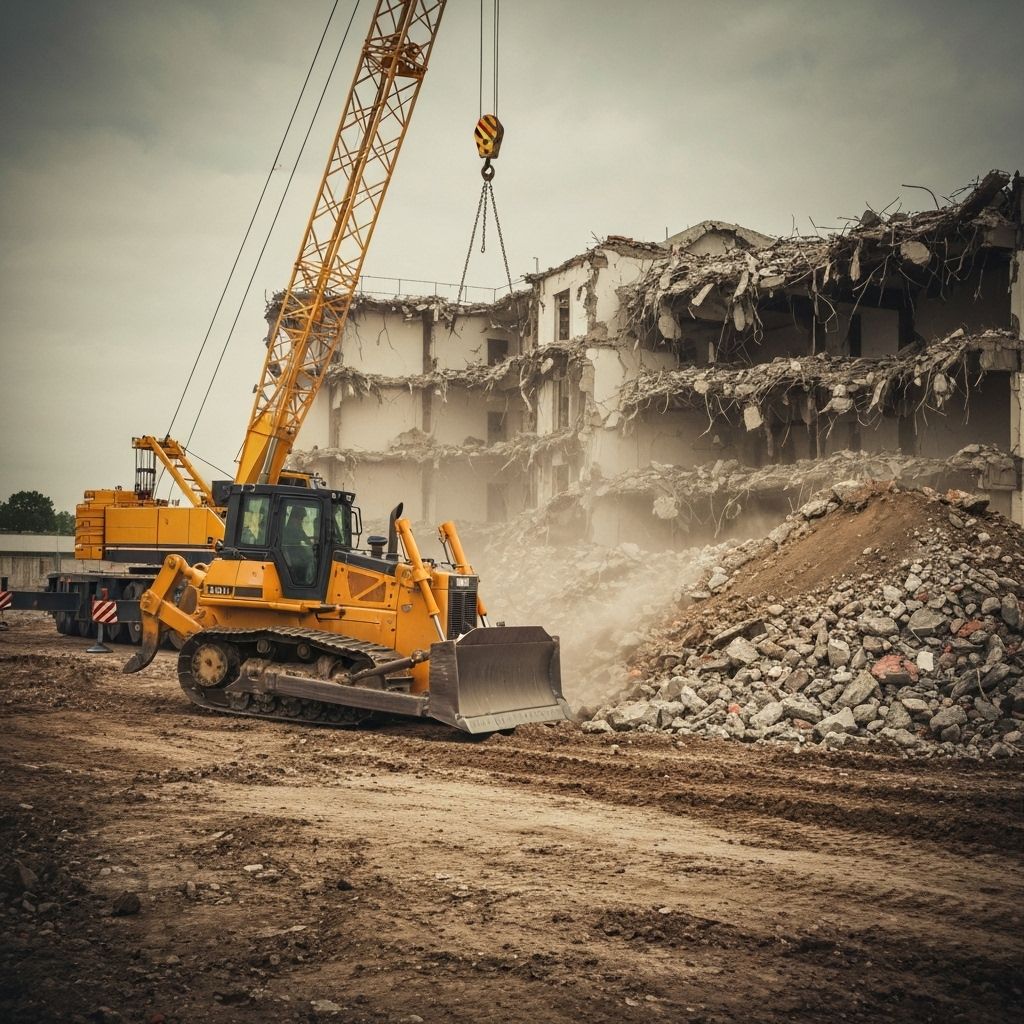
Critical Safety Notice
Demolition is among the most dangerous construction activities. Never attempt demolition without proper training, equipment, and licensing. Louisiana law requires licensed professionals for most demolition projects. This guide is informational—always hire qualified contractors for safety and legal compliance.
Demolition work in Louisiana presents unique challenges: hurricanes, flooding, termite-damaged structures, and strict environmental regulations all demand specialized expertise. Whether you're planning to demolish a residential structure in Lafayette, clear commercial property in New Iberia, or remove deteriorated buildings in Broussard, understanding demolition safety is critical for protecting workers, neighbors, and the environment throughout Acadiana.
This comprehensive guide covers Louisiana-specific regulations, industry best practices, and the safety protocols that professional demolition contractors follow to complete projects safely in South Louisiana's challenging conditions.
Louisiana Demolition Regulations & Permits
Required Permits in Acadiana
- • Demolition Permit: Required by all Louisiana parishes for structures over 200 sq ft
- • Asbestos Survey: Mandatory for buildings constructed before 1981 (EPA regulation)
- • Environmental Assessment: Required for commercial/industrial properties in Lafayette
- • Utility Disconnection Verification: Gas, electric, water must be professionally disconnected
- • Road Use Permit: If demolition affects public roads in New Iberia or Broussard
- • Stormwater Management Plan: Required to prevent runoff contamination in Louisiana
Louisiana State Licensing: Louisiana Contractor's License (Residential or Commercial) is required for demolition contractors. The Louisiana State Licensing Board for Contractors (LSLBC) regulates all demolition work. Verify your contractor holds proper licensing before beginning any demolition project in Acadiana.
Insurance Requirements: Louisiana law mandates general liability insurance ($1 million minimum) and workers' compensation for all demolition contractors. Environmental liability insurance is also recommended for properties with potential contamination issues common in older Louisiana structures.
Local Parish Requirements: Lafayette Parish, Iberia Parish, and St. Martin Parish each have additional local requirements. Contact your parish building department for specific regulations, setback requirements, and notification procedures for neighboring properties in your Acadiana community.
Pre-Demolition Planning & Site Assessment
Comprehensive Site Survey
Professional demolition begins with thorough site assessment addressing Louisiana's unique conditions:
- Structural Evaluation: Assess hurricane damage, termite infestation, and water damage common in Acadiana buildings. Louisiana's high humidity accelerates structural deterioration, requiring careful evaluation before demolition.
- Hazardous Material Inspection: Test for asbestos, lead paint, mold, and chemical contamination. Many pre-1981 Louisiana structures contain asbestos in roofing, siding, and insulation requiring certified abatement before demolition.
- Underground Utilities: Locate water lines, gas mains, septic systems, and buried fuel tanks. Louisiana's high water table makes underground infrastructure identification critical before excavation in Lafayette and surrounding areas.
- Neighboring Structures: Document existing conditions of adjacent properties through photos and video. Louisiana's strict liability laws make pre-demolition documentation essential for protecting against damage claims in Broussard neighborhoods.
- Drainage and Flooding Risk: Assess site drainage, flood zone classification, and proximity to water bodies. Louisiana's frequent heavy rainfall requires comprehensive stormwater management during demolition to prevent runoff contamination.
Weather Considerations for Louisiana Demolition
Acadiana's weather significantly impacts demolition safety and scheduling:
- • Hurricane Season (June-November): Plan projects outside peak season when possible
- • Heavy Rainfall: Louisiana averages 55-60 inches annually—ensure proper drainage
- • Extreme Heat: Summer temperatures over 95°F require additional worker safety measures
- • Humidity: 70-80% humidity levels increase heat stress risk for workers
- • Thunderstorms: Frequent afternoon storms require flexible scheduling in Lafayette
Essential Safety Equipment & Personal Protection
Personal Protective Equipment (PPE)
- • Hard Hats: ANSI Z89.1 certified, mandatory for all workers
- • Safety Glasses/Goggles: Impact-rated eye protection
- • Respirators: N95 minimum for dust, specialized for asbestos
- • Hearing Protection: Required for equipment noise over 85dB
- • Steel-Toe Boots: ASTM certified safety footwear
- • High-Visibility Vests: ANSI Class 2 or 3 for Louisiana jobsites
- • Gloves: Cut-resistant for handling sharp materials
- • Fall Protection: Full-body harness when working above 6 feet
Site Safety Equipment
- • Perimeter Fencing: 6-8ft barriers around demolition zones
- • Warning Signs: Multi-language safety signage per OSHA
- • Dust Suppression: Water trucks for Louisiana's dry conditions
- • Fire Extinguishers: ABC-rated, readily accessible
- • First Aid Stations: Fully stocked, OSHA-compliant kits
- • Communication Systems: Two-way radios for crew coordination
- • Lighting: Adequate illumination for all work areas
- • Safety Nets/Barriers: Fall protection for multi-story demolition
Heat Safety in Louisiana's Climate
Acadiana's extreme heat and humidity create dangerous working conditions. Professional contractors must implement:
- • Hydration Stations: Unlimited cool water accessible to all workers
- • Shade Structures: Break areas protected from direct sun
- • Work/Rest Schedules: Frequent breaks during peak heat (noon-3pm)
- • Heat Illness Training: All workers trained to recognize heat exhaustion/stroke symptoms
- • Acclimatization Period: Gradual increase in workload for new workers in Louisiana heat
- • Emergency Response Plan: Immediate medical care access for heat-related illness
Hazardous Materials Management in Louisiana
Asbestos Abatement Requirements
Louisiana follows EPA's National Emission Standards for Hazardous Air Pollutants (NESHAP) for asbestos handling. All buildings constructed before 1981 in Acadiana require professional asbestos inspection:
- • Inspection: Licensed Louisiana asbestos inspector must survey before demolition
- • Notification: 10 business days advance notice to Louisiana DEQ before work begins
- • Removal: Only licensed Louisiana asbestos contractors can remove materials
- • Disposal: Transport to EPA-approved Louisiana landfills with proper documentation
- • Air Monitoring: Required during and after removal to ensure safe air quality
Lead Paint Management
Pre-1978 structures in Lafayette, New Iberia, and Broussard likely contain lead paint requiring special handling under EPA's Renovation, Repair, and Painting (RRP) Rule:
- • Testing: XRF testing or laboratory analysis to confirm lead presence
- • Containment: Plastic sheeting and HEPA filtration during removal
- • Worker Protection: Specialized PPE including respirators and protective clothing
- • Waste Disposal: Louisiana-approved hazardous waste facilities only
- • Clearance Testing: Post-removal verification of safe lead levels
Other Hazardous Materials in Louisiana
- •Mold: Louisiana's high humidity creates extensive mold growth in abandoned structures. Professional remediation required before demolition to protect worker health and prevent spore dispersal in Acadiana neighborhoods.
- •Underground Storage Tanks (USTs): Common in older Louisiana properties. Must be properly closed or removed per Louisiana Underground Storage Tank regulations to prevent soil and groundwater contamination.
- •PCB-Containing Equipment: Older transformers, fluorescent light ballasts, and electrical equipment may contain PCBs requiring specialized disposal in Louisiana.
- •Mercury: Thermostats, fluorescent bulbs, and some switches contain mercury requiring careful handling and recycling at Louisiana-approved facilities.
Safe Demolition Methods for Acadiana Projects
Mechanical Demolition
Most common method for Louisiana residential and commercial projects:
- • Excavators with attachments: Hydraulic shears, crushers, and grapples for controlled demolition
- • Top-down approach: Safest method for multi-story Lafayette structures
- • Dust suppression: Continuous water spray essential in Louisiana's dry conditions
- • Debris control: Immediate removal prevents tripping hazards and site congestion
- • Equipment inspection: Daily safety checks prevent equipment failure accidents
Selective Demolition/Deconstruction
Increasingly popular in Acadiana for salvaging valuable materials and reducing waste:
- • Salvage valuable materials: Cypress beams, longleaf pine flooring, and heart pine common in Louisiana structures
- • Manual disassembly: Careful removal of reusable components
- • Reduced environmental impact: Diverts 50-75% of demolition waste from landfills
- • Tax benefits: Potential Louisiana tax deductions for material donations
- • Longer timeline: Takes 2-3x longer than mechanical demolition but more sustainable
Implosion (Rare in Acadiana)
Used only for large structures in controlled urban environments:
- • Specialized expertise: Requires licensed blasting professionals
- • Extensive planning: Months of preparation and engineering analysis
- • Evacuation zones: Large perimeter requiring neighborhood coordination
- • Seismic monitoring: Required to protect nearby structures
- • Rarely used: Few structures in Lafayette or New Iberia justify this method
Site Control & Access Management
Perimeter Security: Establish secure boundaries with 6-8 foot fencing around all Louisiana demolition sites. Post warning signs every 50 feet in English and Spanish. Install lockable gates with controlled access to prevent unauthorized entry, especially important in residential Acadiana neighborhoods where curious children pose safety risks.
Traffic Control: Work with Lafayette, New Iberia, and Broussard authorities for road closures or lane restrictions. Provide advance notice to neighbors and emergency services. Post flaggers at site entrances during equipment movement. Louisiana DOT requirements mandate specific signage and traffic control measures for work affecting public roads.
Utility Coordination: Contact Louisiana 811 (Call Before You Dig) at least 3 business days before excavation. Verify all utilities are permanently disconnected—gas, electric, water, sewer, cable, and phone. Physical disconnection at the street is required, not just service cancellation. Failure to properly disconnect utilities causes most serious demolition accidents in Acadiana.
Neighbor Notification: Louisiana courts favor advance notification. Inform adjacent property owners at least 7 days before demolition begins. Document existing conditions with photos and video. Provide contact information for the project manager. Address concerns about noise, dust, and vibration before they become legal issues in Lafayette and surrounding communities.
Environmental Protection During Demolition
Dust Control
- • Continuous water spray during demolition activities
- • Cover debris piles to prevent wind dispersal in Louisiana
- • Pave or stabilize site access roads in Acadiana
- • Clean truck tires before leaving site to prevent tracking
- • Monitor air quality in residential Lafayette neighborhoods
- • Use dust suppressants for extended Louisiana dry periods
Stormwater Management
- • Install silt fences around perimeter before work begins
- • Protect storm drains with inlet protection devices
- • Grade site to prevent runoff during Louisiana storms
- • Maintain vegetated buffers where possible in Broussard
- • Regular inspection after rain events in Acadiana
- • Louisiana NPDES permit for projects over 1 acre
Noise Control
- • Follow local parish noise ordinances (typically 7am-7pm)
- • Use equipment with proper mufflers and sound dampening
- • Erect temporary sound barriers near residential areas
- • Schedule noisiest activities for mid-day in New Iberia
- • Notify neighbors of especially disruptive operations
- • Monitor decibel levels near property lines in Lafayette
Waste Management
- • Separate recyclable materials (metal, wood, concrete)
- • Dispose of hazardous waste at Louisiana-approved facilities
- • Crush concrete on-site for reuse when possible in Acadiana
- • Document waste disposal with manifests and receipts
- • Prevent illegal dumping through secure waste containers
- • Achieve 50%+ diversion from landfills per Louisiana DEQ goals
Emergency Response Procedures
Emergency Contact Information
• Emergency Services: 911
• Louisiana Poison Control: 1-800-222-1222
• Louisiana DEQ Emergency: 1-888-763-5424
• OSHA Hotline: 1-800-321-6742
• National Response Center (spills): 1-800-424-8802
• Lafayette Regional Medical Center: (337) 289-7991
• Iberia Medical Center: (337) 364-0441
Medical Emergency Protocol
- Call 911 immediately for serious injuries or life-threatening situations
- Designate trained first responder to provide care while waiting for EMS
- Clear access route for ambulance to reach injured worker in Louisiana site
- Notify project manager and safety coordinator immediately
- Secure accident scene for investigation—do not disturb evidence
- Document incident with photos, witness statements, and timeline
- Report to OSHA within 8 hours for fatalities, 24 hours for hospitalizations
- Conduct root cause analysis to prevent recurrence on Acadiana projects
Structural Collapse Protocol
- Evacuate all personnel immediately to safe distance (minimum 100 feet)
- Account for all workers using sign-in/sign-out logs
- Call 911 if anyone potentially trapped or injured
- Establish perimeter preventing entry to unstable area
- Contact structural engineer before resuming Louisiana demolition
- Document collapse for insurance and investigation purposes
- Review demolition plan with engineering team before proceeding in Acadiana
Environmental Spill Response
- Stop the source if safe to do so without personal risk
- Contain the spill using absorbent materials or berms
- Call National Response Center (1-800-424-8802) for significant spills
- Notify Louisiana DEQ for hazardous material releases
- Evacuate area if toxic vapors present in Lafayette or New Iberia site
- Prevent drainage to storm sewers, waterways, or soil
- Engage spill response contractor for large or hazardous releases in Acadiana
- Document cleanup and disposal per Louisiana environmental regulations
Required Training for Demolition Workers
OSHA Training Requirements
- OSHA 10-Hour Construction: Minimum for all Louisiana demolition workers covering hazard recognition, fall protection, electrical safety, and PPE requirements
- OSHA 30-Hour Construction: Required for supervisors and foremen on Acadiana projects, includes advanced safety management and regulatory compliance
- Competent Person Training: Specialized courses for scaffold inspection, excavation safety, and fall protection systems used in Lafayette demolition
- Hazard Communication: GHS training for chemical hazards, SDS interpretation, and labeling requirements for Louisiana worksites
- Respiratory Protection: Fit testing and proper use of respirators for dust and hazardous material exposure in Broussard projects
Specialized Louisiana Training
- • Asbestos Awareness: 8-hour course for workers near asbestos materials
- • Lead-Safe Work Practices: EPA RRP certification for pre-1978 Louisiana structures
- • Heat Illness Prevention: Critical for Acadiana's extreme summer conditions
- • Hurricane Preparedness: Securing sites and emergency procedures for Louisiana storms
- • Confined Space Entry: Required for work in tanks, pits common in industrial demolition
- • Equipment Operation: Certification for excavators, loaders, and specialized attachments
Quality Control & Site Inspections
Daily Safety Inspections: Competent person must inspect Louisiana demolition sites before each shift. Document equipment condition, PPE availability, fall protection systems, and environmental controls. Address deficiencies immediately—never allow work to proceed with known hazards on Acadiana jobsites.
Weekly Safety Meetings: Conduct toolbox talks covering specific hazards for upcoming work in Lafayette and New Iberia. Review recent incidents or near-misses. Reinforce safe work practices. Document attendance and topics discussed for OSHA compliance and Louisiana workers' compensation protection.
Third-Party Inspections: Parish building inspectors may require periodic inspections during demolition in Broussard and surrounding areas. Louisiana DEQ inspectors monitor environmental compliance. OSHA conducts random inspections and responds to complaints. Maintain ready access to all permits, training records, and safety documentation for Acadiana projects.
Post-Demolition Verification: Final inspection confirms complete debris removal, proper site grading, and restoration of disturbed areas. Document underground utility disconnections and proper capping. Verify all waste disposal with manifests. Obtain final release from parish building department before project closure in Louisiana.
Most Common OSHA Violations in Louisiana Demolition
1. Fall Protection Deficiencies
Leading cause of demolition fatalities. Inadequate guardrails, missing personal fall arrest systems, and improper scaffold construction. OSHA fines: $7,000-$15,000 per violation in Acadiana.
2. Respiratory Protection Failures
Workers exposed to silica dust, asbestos, or lead without proper respirators. Lack of fit testing, medical evaluations, or written programs. Penalties: $7,000-$15,000 per exposed worker in Louisiana.
3. Hazard Communication Violations
Missing Safety Data Sheets, inadequate chemical labeling, or lack of worker training on hazardous materials. Common in Lafayette projects. Fines: $7,000-$15,000 per violation.
4. Scaffolding Non-Compliance
Improperly erected scaffolds, missing toe boards, inadequate access, or lack of competent person inspections. Frequently cited on Broussard and New Iberia demolition sites. Penalties: $7,000-$15,000.
5. Lockout/Tagout Failures
Equipment not properly de-energized during maintenance or demolition. Causes serious injuries and fatalities in Acadiana. OSHA penalties: $7,000-$15,000, potential criminal charges for fatalities.
Selecting a Professional Demolition Contractor
Essential Qualifications for Louisiana
- Louisiana Contractor's License: Verify active license with Louisiana State Licensing Board for Contractors (LSLBC). Check for disciplinary actions or complaints in Acadiana.
- Comprehensive Insurance: Minimum $1 million general liability, $1 million workers' compensation, and environmental liability coverage for Louisiana projects. Request certificates naming you as additional insured.
- Safety Record: Request OSHA 300 logs, Experience Modification Rate (EMR below 1.0 preferred), and recent safety inspection results for Acadiana operations.
- Louisiana Experience: Minimum 5 years demolition experience in South Louisiana demonstrating knowledge of local regulations, soil conditions, and weather challenges in Lafayette region.
- Specialized Certifications: Asbestos removal license, lead abatement certification, and hazardous waste handling permits for comprehensive Louisiana demolition services.
- References: Minimum 3 recent Acadiana projects similar in scope. Contact references to verify quality, safety performance, and completion timelines in New Iberia and Broussard areas.
Red Flags to Avoid
- • ❌ No Louisiana contractor's license or expired/suspended license
- • ❌ Insufficient or no insurance coverage for Acadiana operations
- • ❌ Unwilling to provide references or documentation
- • ❌ Significantly lower bid than other qualified contractors (usually corners safety)
- • ❌ Pressure to start immediately without proper permitting in Lafayette
- • ❌ Cash-only transactions or requests for large upfront payments
- • ❌ Poor safety record or OSHA violations in Louisiana
- • ❌ Unfamiliar with Louisiana environmental regulations or hazardous material handling
Professional Demolition Services Throughout Acadiana
Logan's Tree Service provides safe, professional demolition services throughout Lafayette, New Iberia, Broussard, and all of Acadiana. Our licensed, insured team follows all Louisiana regulations and industry best practices to complete your demolition project safely and efficiently. From residential structures to commercial buildings, we handle projects of all sizes with the expertise and equipment necessary for safe Louisiana demolition.